



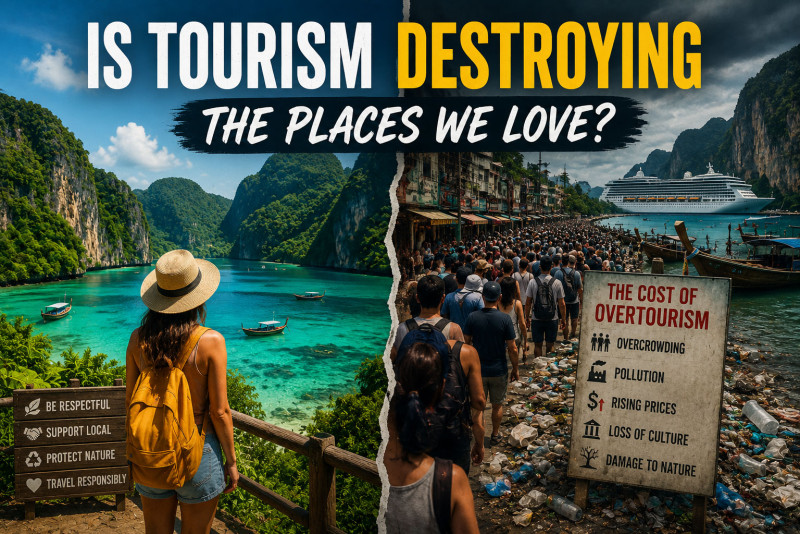
Travel has never been more accessible.
Affordable flights, online booking platforms, social media, and remote work have made it easier than ever to explore the world. Every year, millions of people visit famous cities, tropical islands, historic landmarks, and natural wonders that previous generations could only dream of seeing.
Tourism has become one of the world's largest industries, generating jobs, supporting local businesses, and connecting cultures across continents.
Yet behind the breathtaking photographs and carefully curated travel videos lies a growing concern.
Can a place become too popular for its own good?
Around the world, destinations that once welcomed visitors are beginning to struggle with overcrowding, environmental damage, rising living costs, and the gradual loss of their local identity. The challenge is no longer encouraging tourism—it is managing it in a way that benefits both visitors and the communities that call these places home.
Tourism Brings Enormous Benefits
Before discussing the challenges, it's important to recognize why tourism matters.
For many countries and regions, visitors provide a vital source of income.
Tourism supports:
- Local businesses
- Hotels and accommodations
- Restaurants and cafés
- Tour guides
- Transportation services
- Museums and cultural sites
- Small family-owned shops
In many communities, tourism creates opportunities that might not otherwise exist.
It can also encourage governments to preserve historical landmarks, invest in infrastructure, and protect cultural heritage that might otherwise be neglected.
When managed responsibly, tourism can strengthen local economies while promoting cultural understanding.
When Popularity Becomes a Problem
Success, however, comes with consequences.
As destinations gain worldwide attention, the number of visitors can quickly exceed what local infrastructure was designed to handle.
This often leads to problems such as:
- Overcrowded streets
- Long queues at attractions
- Increased traffic
- Noise pollution
- Pressure on public transportation
- Strain on local services
For residents, everyday life becomes more difficult.
Neighborhoods that once felt peaceful can transform into year-round tourist districts where daily routines revolve around visitors rather than local communities.
The Environmental Cost
Nature is often one of tourism's biggest attractions.
Ironically, increased tourism can threaten the very environments people travel to experience.
Popular destinations frequently face:
- Erosion of hiking trails
- Damage to coral reefs
- Wildlife disturbance
- Increased waste and litter
- Water shortages
- Air pollution from transportation
Many natural landmarks were never designed to accommodate millions of visitors each year.
Even seemingly harmless activities can have lasting environmental consequences when repeated on a massive scale.
Protecting these places requires balancing public access with long-term conservation.
The Impact on Local Communities
Tourism affects more than landscapes.
It also changes communities.
As visitor numbers increase, local businesses often adapt to serve tourists rather than residents.
Traditional shops may be replaced by souvenir stores.
Family-owned restaurants may shift toward international menus.
Historic neighborhoods may gradually lose the character that made them unique in the first place.
Housing has become another growing concern.
In many popular destinations, short-term vacation rentals have reduced the availability of long-term housing.
This can contribute to:
- Rising property prices
- Higher rental costs
- Population displacement
- Changing neighborhood demographics
For local residents, living in a world-famous destination may become increasingly unaffordable.
Social Media Has Changed How We Travel
Travel was once driven largely by guidebooks and personal recommendations.
Today, a single viral post can transform an unknown location into an international destination almost overnight.
Platforms encourage travelers to seek:
- Instagram-worthy viewpoints
- Hidden beaches
- Scenic cafés
- Colorful streets
- Unique landmarks
The search for the perfect photograph has created a new form of tourism where popularity spreads faster than destinations can prepare for it.
Places that once welcomed a few hundred visitors each month may suddenly receive thousands each day.
While increased attention can boost local economies, it can also overwhelm communities that lack the resources to manage rapid growth.
Can Sustainable Tourism Work?
Many destinations are searching for better solutions.
Rather than discouraging travel, they are exploring ways to make tourism more sustainable.
Some approaches include:
- Limiting visitor numbers during peak seasons
- Protecting environmentally sensitive areas
- Encouraging travel outside traditional tourist periods
- Supporting locally owned businesses
- Investing tourism revenue into conservation projects
- Promoting responsible visitor behavior
The goal is not to prevent people from exploring the world.
It is to ensure that future generations can enjoy the same places.
Travelers Also Have a Role
Governments and businesses are not the only ones responsible.
Individual travelers influence destinations through the choices they make.
Simple decisions can have a meaningful impact:
- Respect local customs and traditions.
- Dispose of waste responsibly.
- Support independent businesses.
- Follow environmental guidelines.
- Stay on designated trails.
- Choose accommodations that prioritize sustainability.
- Treat communities as homes, not attractions.
Responsible tourism begins long before arriving at a destination.
It starts with understanding that every place is more than a backdrop for photographs.
People live there.
Communities grow there.
Cultures continue there.
Why This Conversation Matters
Tourism is not the problem.
Irresponsible tourism is.
Travel has the power to broaden perspectives, preserve cultural heritage, and create lasting memories.
It allows people to experience different ways of life and appreciate the diversity of our world.
But when destinations become commodities rather than communities, everyone loses.
Visitors experience overcrowded attractions instead of authentic places.
Residents lose the qualities that made their hometowns special.
Natural environments suffer under increasing pressure.
The Future of Travel
The world will continue to travel.
Technology will make exploring new places even easier in the years ahead.
The challenge is ensuring that growth does not come at the expense of the destinations themselves.
The most memorable journeys are rarely defined by the number of landmarks visited.
They are shaped by meaningful experiences, genuine cultural connections, and respect for the places that make those experiences possible.
The future of tourism depends not only on where we choose to travel, but on how we choose to travel once we arrive.