



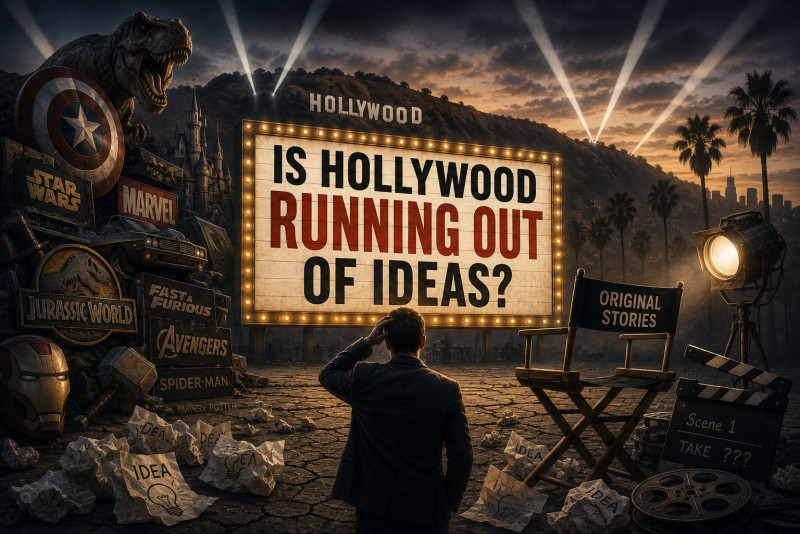
For generations, Hollywood has been synonymous with creativity.
It introduced audiences to unforgettable characters, groundbreaking visual effects, and stories that shaped popular culture around the world. Every year brought original films that inspired new franchises, launched careers, and pushed the boundaries of storytelling.
Today, however, a growing number of moviegoers are asking a different question.
Why does it feel like we're watching the same movies over and over again?
Sequels, remakes, reboots, live-action adaptations, cinematic universes, and familiar intellectual properties dominate theaters and streaming platforms. While many of these productions are commercially successful, they have also fueled a broader debate about whether Hollywood is becoming less willing to take creative risks.
Is Hollywood truly running out of ideas, or has the business of filmmaking simply changed?
The Rise of Familiar Stories
Walk into almost any movie theater today, and the lineup often feels familiar.
Many of the biggest releases are connected to stories audiences already know.
Recent years have seen an endless stream of:
- Sequels
- Prequels
- Spin-offs
- Reboots
- Live-action remakes
- Comic book adaptations
- Franchise expansions
These films are not automatically bad. Some introduce fresh perspectives and expand beloved worlds in meaningful ways.
The question isn't whether familiar stories deserve to exist.
The question is why they dominate the industry so completely.
The Business Behind the Blockbusters
Hollywood is both an art form and a business.
Producing a major film can cost hundreds of millions of dollars before marketing expenses are even considered.
With so much money at stake, studios naturally look for projects with the highest chance of financial success.
Established franchises provide advantages such as:
- Existing fan bases
- Global brand recognition
- Proven merchandise opportunities
- Lower marketing risk
- Greater international appeal
From a financial perspective, investing in a well-known property often appears safer than introducing an entirely new world or original characters.
The result is an industry that increasingly favors predictability over experimentation.
Audiences Share Some Responsibility
It's easy to blame Hollywood for relying on familiar formulas.
But audiences also influence what gets made.
When original films struggle at the box office while franchise films consistently attract millions of viewers, studios receive a clear message.
Consumers often say they want originality.
Their ticket purchases sometimes tell a different story.
This creates a cycle:
- Studios produce familiar content.
- Audiences support recognizable brands.
- Financial success reinforces the strategy.
- More franchise projects receive approval.
Breaking that cycle requires both studios and audiences to embrace greater creative risk.
Streaming Changed the Equation
The arrival of streaming services transformed entertainment.
Instead of competing for weekend box office revenue alone, studios now compete for subscriber attention.
This has changed how success is measured.
Streaming platforms prioritize content that encourages users to stay subscribed.
Well-known franchises often perform well because they immediately attract attention in crowded content libraries.
At the same time, streaming has created new opportunities for independent filmmakers, international productions, and limited series that might never have reached mainstream audiences in the past.
The landscape is more diverse than ever.
The challenge is that the biggest headlines still tend to revolve around familiar brands.
Creativity Hasn't Disappeared
Despite criticism, originality is far from extinct.
Every year, filmmakers continue to produce imaginative stories that explore new ideas, cultures, and perspectives.
Many independent films receive critical acclaim despite limited budgets.
International cinema continues to introduce audiences to fresh storytelling techniques.
Original stories still exist.
The difference is that they often receive less visibility than billion-dollar franchises.
Finding them sometimes requires looking beyond the biggest studio releases.
The Pressure of Expectations
Modern blockbusters face enormous expectations.
Studios are not simply creating a film.
They are protecting valuable intellectual property that may generate revenue through:
- Streaming
- Merchandise
- Theme parks
- Video games
- Licensing
- Television spin-offs
Creative decisions become increasingly influenced by long-term business strategy.
Writers and directors often work within established universes rather than building entirely new ones.
Innovation becomes more difficult when every creative decision affects a global brand.
Are Remakes Always a Bad Thing?
Not necessarily.
Some remakes introduce classic stories to new generations.
Others modernize outdated themes or improve upon the original source material.
The issue is not the existence of remakes.
The issue is balance.
When original storytelling becomes the exception rather than the rule, audiences naturally begin to question whether the industry has become too dependent on existing ideas.
A healthy entertainment industry should be able to celebrate both innovation and nostalgia.
AI and the Future of Storytelling
Artificial intelligence is beginning to enter conversations about filmmaking.
While AI can assist with visual effects, editing, concept art, and production workflows, it also raises questions about creativity itself.
Could studios eventually rely on AI to analyze audience preferences and generate stories designed for maximum commercial appeal?
If storytelling becomes increasingly driven by algorithms and market data, originality could face new challenges.
At the same time, AI may also lower production costs for independent filmmakers, giving fresh voices more opportunities to compete.
Like every new technology, its impact will depend on how it is used.
Why Original Stories Still Matter
Original films do more than entertain.
They introduce new perspectives, inspire future creators, and reflect the changing world around us.
Every iconic franchise once began as an original idea.
Without creators willing to take risks, many of today's most beloved films would never have existed.
Innovation has always driven cinema forward.
Protecting that spirit remains essential for the future of storytelling.
The Future of Hollywood
Hollywood is not running out of talented writers, directors, or actors.
It is operating within an industry that increasingly rewards financial certainty over creative uncertainty.
The challenge is finding the right balance.
Audiences still crave memorable stories.
Studios still need profitable films.
Independent creators continue to push boundaries.
The next generation of cinematic classics may already be waiting to be discovered.
The real question is whether the industry will continue investing primarily in familiar worlds—or whether it will once again take the risks that gave us so many unforgettable stories in the first place.