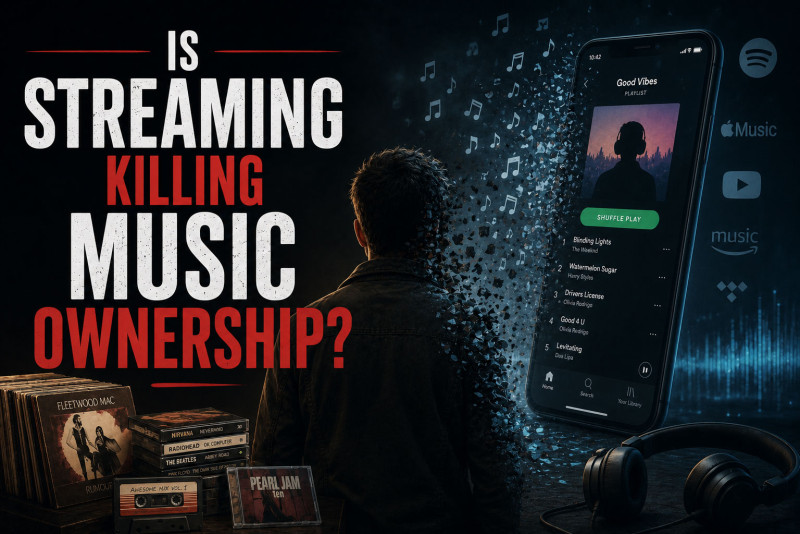
Not long ago, owning music was part of the listening experience.
People proudly displayed shelves filled with vinyl records, cassette tapes, or CDs. Building a music collection took time, money, and intention. Every album purchased represented a conscious choice, and many listeners developed a personal connection with the artists they supported.
Today, that relationship has changed dramatically.
With just a monthly subscription, millions of songs are available instantly on almost any device. Streaming has transformed music into an always-accessible service rather than a product people own.
For listeners, the convenience is undeniable.
But as streaming becomes the dominant way to consume music, an important question is emerging.
Are we slowly giving up ownership in exchange for unlimited access?
Music Has Become a Service
The shift from physical media to digital downloads was significant.
The shift from downloads to streaming was even bigger.
Instead of purchasing individual albums or songs, listeners now pay for access to enormous music libraries that update constantly.
Streaming offers clear advantages:
- Instant access to millions of songs
- Personalized recommendations
- Curated playlists
- Offline listening
- Cross-device synchronization
- New releases available immediately
Finding music has never been easier.
Owning it has never been less common.
Convenience Changed Everything
Streaming succeeded because it solved problems that previous formats could not.
There are no discs to store.
No files to organize.
No downloads to manage.
Listeners can discover new artists with a few taps and switch effortlessly between genres, decades, and languages.
For many people, ownership simply became unnecessary.
Why buy one album when nearly every album is already available?
Convenience became more valuable than possession.
What Does Ownership Mean Today?
When someone buys a vinyl record, a CD, or even a digital download, they own a copy of that music.
Streaming works differently.
Subscribers are paying for access, not ownership.
If a subscription ends, access usually disappears.
Songs can also be removed from streaming platforms because of licensing agreements, regional restrictions, or business decisions.
In many cases, listeners have built libraries they don't actually own.
They simply rent access to them.
Artists Face a Different Reality
Streaming has changed more than how people listen.
It has also transformed how musicians earn money.
Instead of relying primarily on album sales, many artists now generate income through:
- Streaming royalties
- Concert tours
- Merchandise
- Brand partnerships
- Fan memberships
- Exclusive content
For globally successful artists, streaming provides enormous exposure.
For independent musicians, the financial picture can be much more complicated.
Millions of plays may still produce relatively modest revenue compared to traditional album sales.
This has fueled ongoing discussions about how artists should be compensated in the digital age.
Discovery Has Never Been Better
Streaming deserves credit for one remarkable achievement.
It has made discovering music easier than ever before.
Listeners can explore artists from every corner of the world without visiting a record store or purchasing an unfamiliar album.
Algorithms recommend new songs based on listening habits.
Playlists introduce emerging musicians to global audiences.
Independent artists can reach listeners directly without relying entirely on traditional record labels.
In many ways, streaming has democratized music discovery.
But Algorithms Also Shape Taste
The same technology that expands discovery also influences what people hear.
Recommendation systems decide which songs appear first.
Editorial playlists determine which artists receive massive exposure.
Trending charts amplify already popular music.
As a result, algorithms increasingly shape listening habits.
This raises important questions.
Are listeners choosing music freely?
Or are recommendation systems quietly guiding those choices?
The answer is likely somewhere in between.
The Return of Vinyl
Interestingly, physical music has not disappeared.
Vinyl records have experienced a remarkable resurgence in recent years.
Many collectors value them for reasons that extend beyond sound quality.
Physical formats offer:
- Tangible ownership
- Album artwork
- Collectible value
- Emotional connection
- Long-term preservation
- A more intentional listening experience
For many fans, owning music remains meaningful.
It transforms songs into lasting possessions rather than temporary streams.
Can Streaming and Ownership Coexist?
Perhaps this is not an either-or debate.
Many music lovers embrace both approaches.
Streaming provides convenience during everyday life.
Physical collections preserve favorite albums.
Digital purchases offer permanent access.
Each format serves a different purpose.
The future may not involve replacing ownership entirely.
Instead, ownership may become something reserved for music that holds personal significance.
The Future of Listening
Technology will continue changing how people experience music.
Artificial intelligence is already influencing composition, recommendations, and personalized playlists.
Immersive audio formats continue to evolve.
Cloud-based libraries are becoming even more sophisticated.
Despite these innovations, one thing remains unchanged.
Music is ultimately about connection.
Whether it arrives through a vinyl record, a digital download, or a streaming platform, its emotional impact depends on the listener, not the technology delivering it.
Access Is Not Always Ownership
Streaming has transformed music into one of the most accessible forms of entertainment in history.
It has introduced countless artists to new audiences and given listeners unprecedented choice.
But it has also redefined what it means to own music.
As subscriptions increasingly replace personal collections, many people are beginning to realize that convenience often comes with trade-offs.
The future of music may not depend on choosing between streaming and ownership.
It may depend on finding the right balance between unlimited access and preserving the albums, artists, and memories that deserve a permanent place in our lives.